

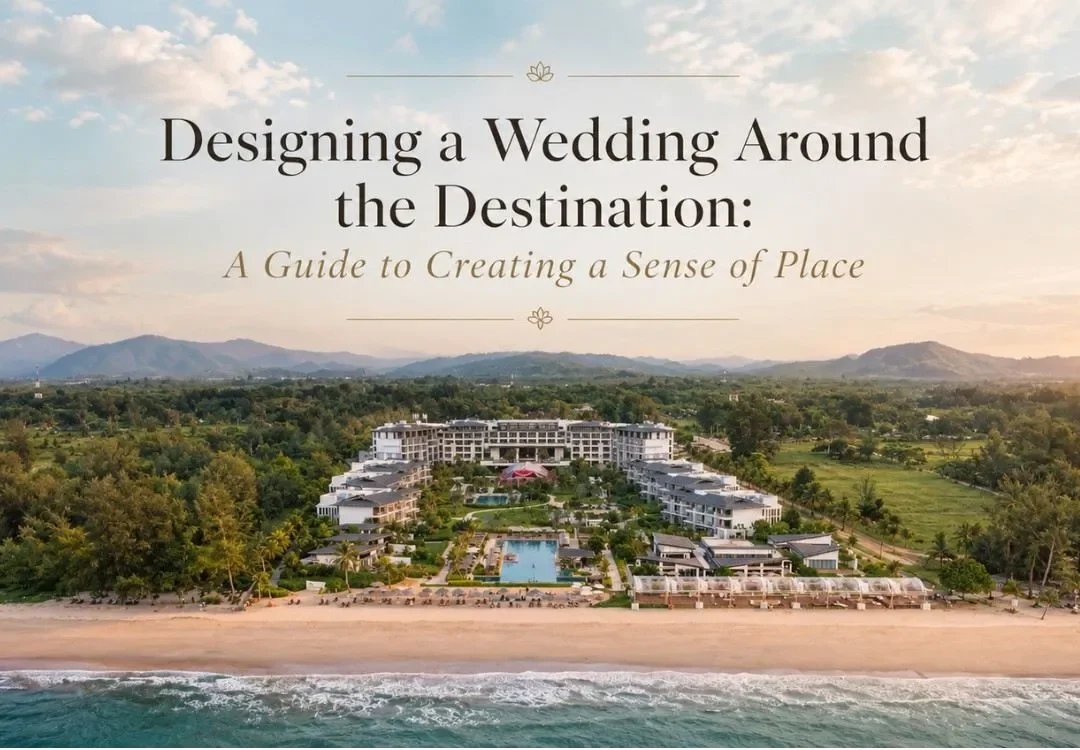
24 Sep Designing a Wedding Around the Destination: A Guide to Creating a Sense of Place
A destination wedding begins with a place. But the most memorable ones do something more they make that place part of the wedding itself.
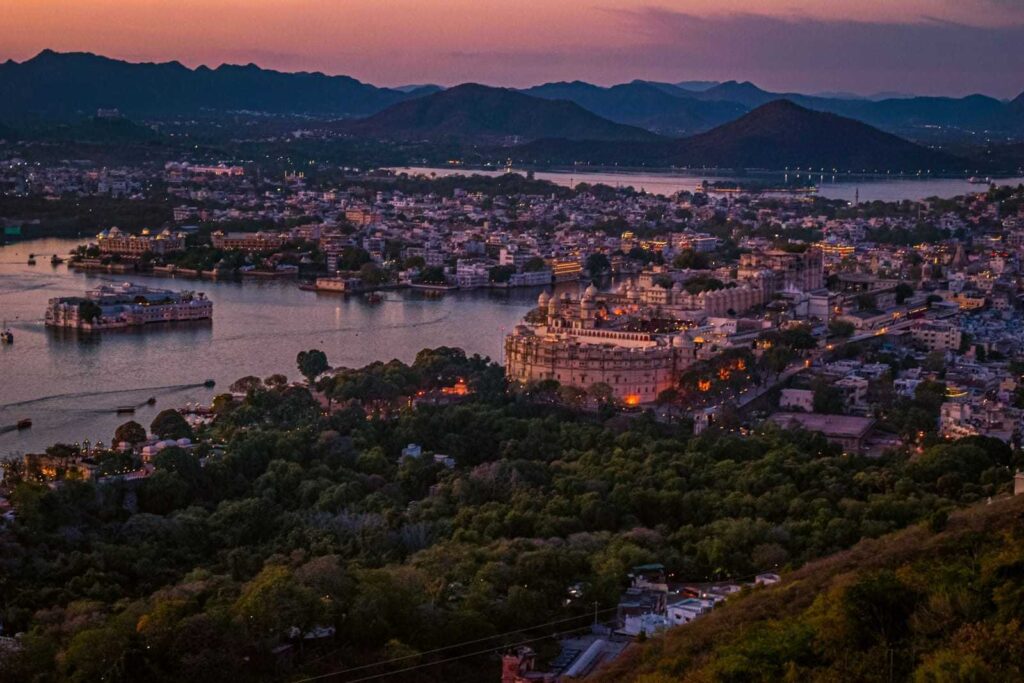
Think of a celebration overlooking the lakes of Udaipur, where the stillness of the water becomes part of an evening. Picture a wedding in Jaipur, where centuries-old architecture, craftsmanship and warm desert light naturally influence the atmosphere. Or imagine a celebration in Thailand, where tropical landscapes, open-air spaces and the rhythm of the coast shape the guest experience.
In each case, the destination is doing more than providing a beautiful backdrop.
It is becoming part of the story.
This is what creating a sense of place means in destination wedding design. It is about understanding what makes a destination distinctive and allowing those qualities to influence the way a wedding looks, sounds, tastes and feels. It is not about turning a wedding into a theme inspired by its location. It is about creating something that feels so naturally connected to its surroundings that it could not have happened anywhere else.
Start With the Destination, Not the Mood Board
Wedding design often begins with inspiration. A colour palette is selected, references are collected and a visual direction starts to emerge. But when planning a destination wedding, there is another place to begin with the destination itself.
Before deciding what to bring into a space, consider what is already there. A palace has a visual language of its own. A coastal resort has an entirely different rhythm. A heritage property carries layers of history through its architecture, materials and proportions, while a contemporary resort may offer clean lines, expansive views and a closer relationship with nature.
These characteristics can become the foundation of the design.
Instead of asking, “What should we add to this venue?”, a more interesting question is, “What can we bring out of this venue?”
That shift can completely change the way a luxury destination wedding comes together. The architecture begins to influence the layout. The landscape informs the positioning of an event. The existing textures guide material choices. Even the natural light can become part of the design.
The result feels considered rather than constructed.
When the Venue Becomes Part of the Design
Some venues require transformation. Others already have a story waiting to be revealed.
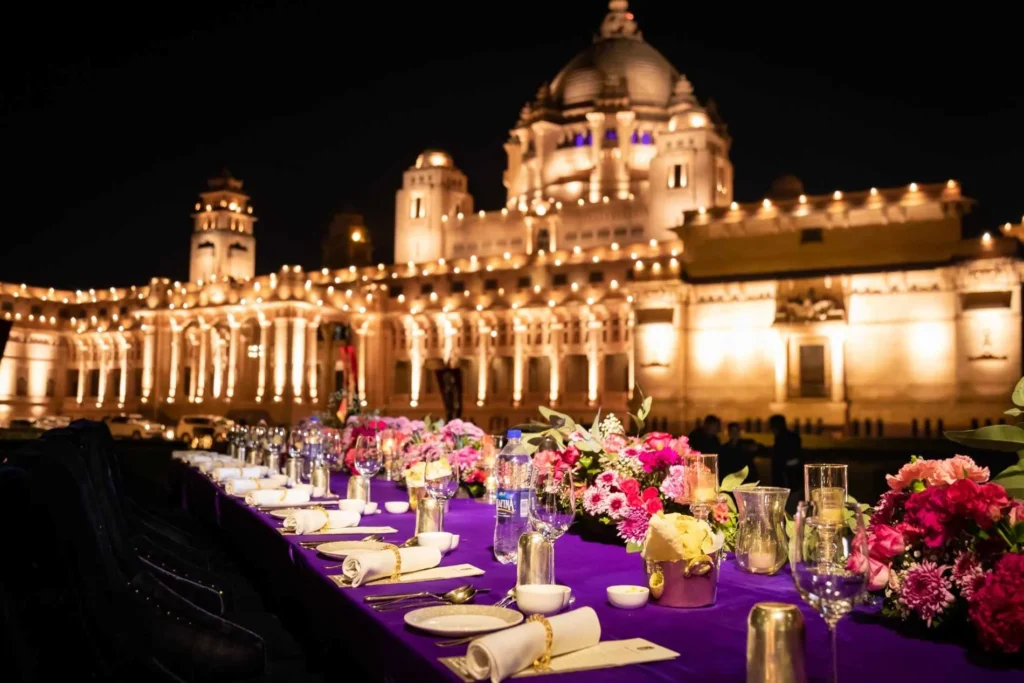
A historic palace does not need to be hidden beneath layers of décor. Its arches, courtyards, stonework and proportions can become part of the visual experience. A beachfront setting does not need to compete with the sea. Instead, the design can frame the horizon, work with the movement of the landscape and allow the natural surroundings to remain visible.
This is where restraint becomes an important part of luxury wedding design.
A floral installation can draw attention to an architectural detail rather than cover it. Lighting can reveal the character of a historic façade after sunset. A dinner table can be positioned so that guests experience the landscape while they dine. A ceremony can be planned around the changing light of the afternoon.
The destination has already given you something extraordinary.
The role of design is to know how to use it.
Let Local Craft Become Inspiration
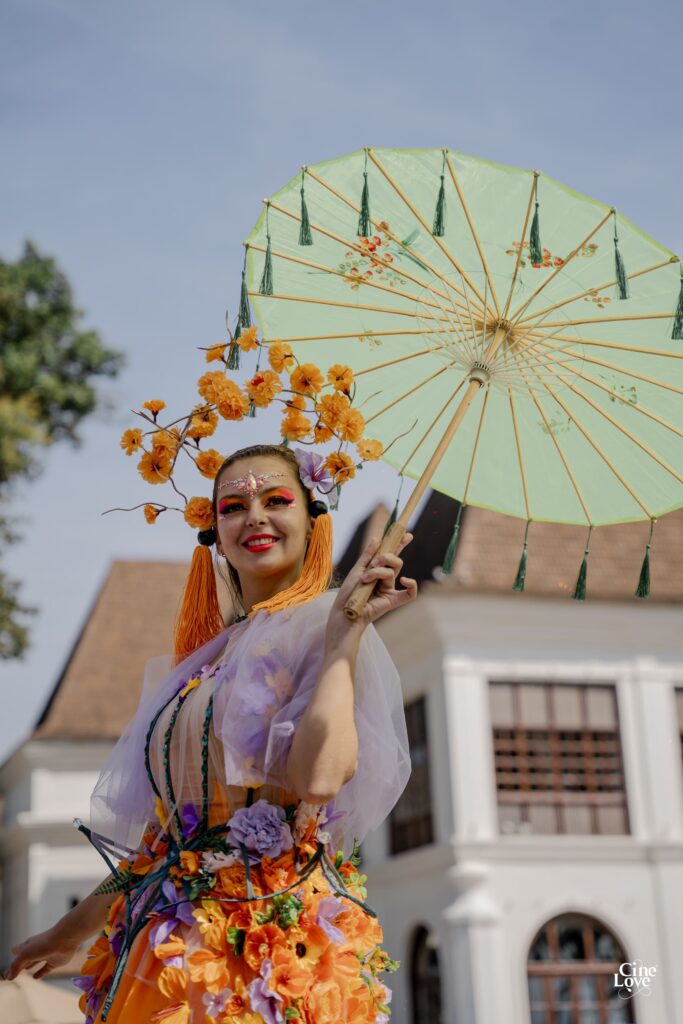
Every destination has its own visual vocabulary. Rajasthan has generations of textile, stone, metal and decorative craftsmanship. Goa has a distinctive coastal character shaped by its architecture, colours and relationship with the outdoors. Thailand brings its own traditions of craftsmanship, natural materials and hospitality.
The challenge is not finding these influences. It is knowing how to interpret them.
A luxury destination wedding does not need to reproduce every recognizable element of the place. Instead, local inspiration can be translated into something contemporary and personal. A traditional pattern might influence stationery or flooring. A regional textile could inspire the texture of a table setting. A local craft technique could become the foundation of a bespoke installation.
The connection can be subtle.
Guests do not necessarily need to identify the reference immediately. They simply need to feel that the design belongs to its surroundings.
The destination should inspire the wedding not become its costume.
Let the Destination Come Through the Food
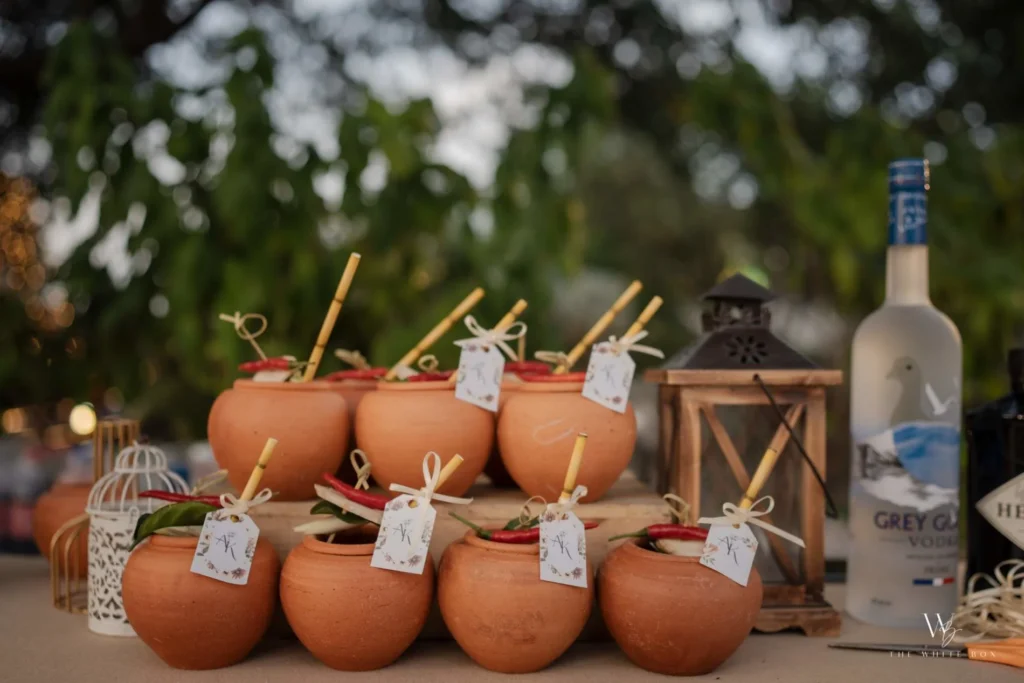
There are many ways to experience a destination, but few are as immediate as food.
A destination wedding gives couples the opportunity to introduce their guests to the character of a place through its cuisine. Regional ingredients, local flavours, traditional techniques and contemporary interpretations can all become part of the wedding experience.
This does not mean that every meal has to be traditional. In fact, the most interesting menus often find a balance between the destination and the couple.
A welcome dinner could introduce guests to local flavours. A daytime gathering could feature regional ingredients in a more relaxed format. A private dinner could reinterpret familiar cuisine through a contemporary menu. Even a signature drink can quietly reference the destination through its ingredients.
Food becomes another layer of storytelling.
The destination provides the inspiration, while the couple gives it their own identity.
Design Around the Landscape
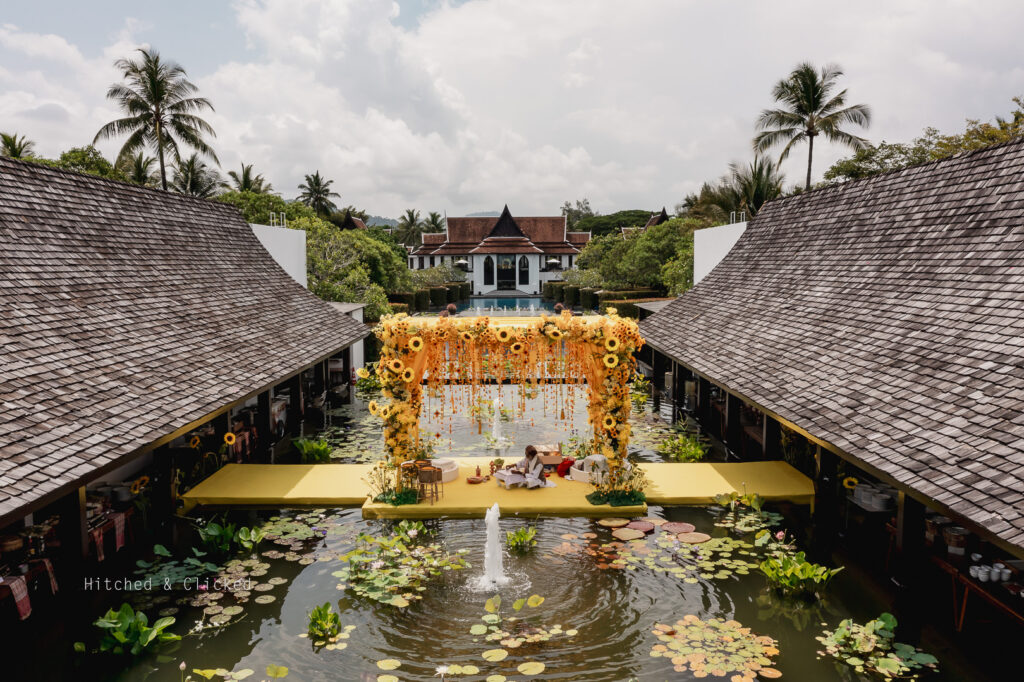
Some of the most remarkable elements at a destination wedding cannot be created by a décor team.
A sunset over a lake.
The sound of waves along a coastline.
A palace courtyard beneath an evening sky.
A mountain appearing beyond the venue.
The changing colours of natural light.
These are part of the destination’s visual language, and they deserve to be considered from the beginning of the planning process.
A ceremony can be timed around the most beautiful light of the day. A sundowner can gradually transition from daylight into evening. A dinner can be positioned to allow the surrounding landscape to remain part of the experience. A floral installation can frame a view instead of obstructing it.
This is where thoughtful destination wedding planning can make a significant difference.
The best destination wedding décor does not always compete for attention.
Sometimes, it simply knows what to frame.
A Wedding Weekend Should Feel Like One Story
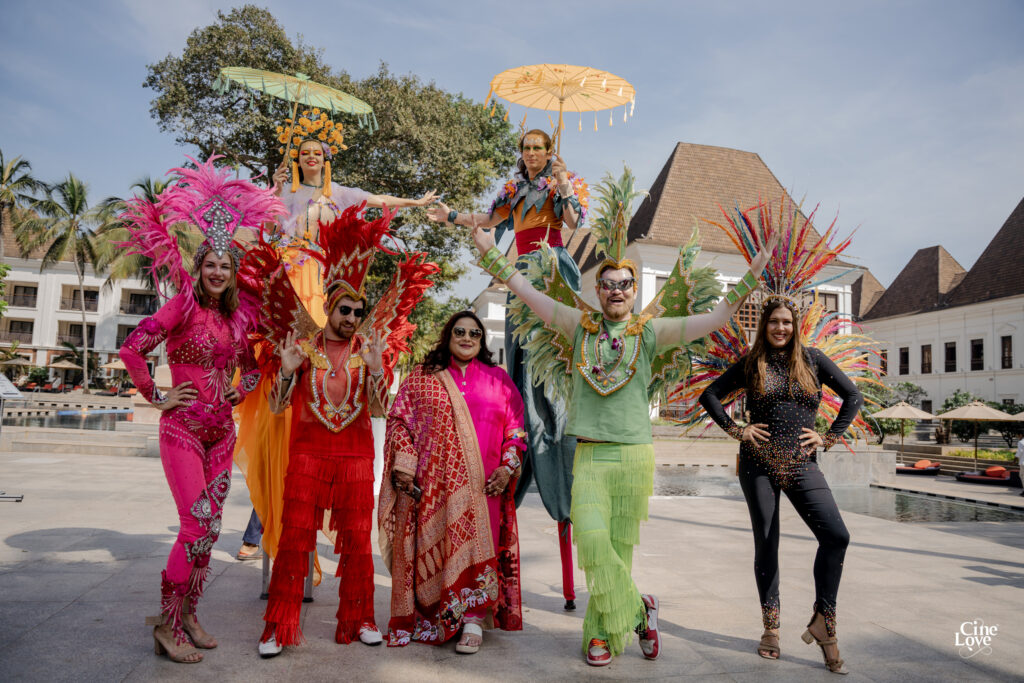
A destination wedding is rarely a single moment. It is a collection of experiences that begin when guests arrive and continue until they leave.
That creates an opportunity to design the wedding as a journey.
The welcome can introduce the destination. A daytime event can embrace its landscape. An evening gathering can draw from the architecture. A more intimate dinner can focus on food, music or conversation. The wedding day can bring everything together in its most complete expression.
Each event can have its own personality without feeling disconnected from the others.
Think of it as chapters in the same book. The mood may change, the setting may change and the design may evolve, but there should always be something that connects them.
This is where wedding experience design becomes particularly important. A multi-day destination wedding should not feel like several independent events happening at the same hotel. It should feel like one carefully considered experience unfolding over time.
The Destination Should Be Heard, Too
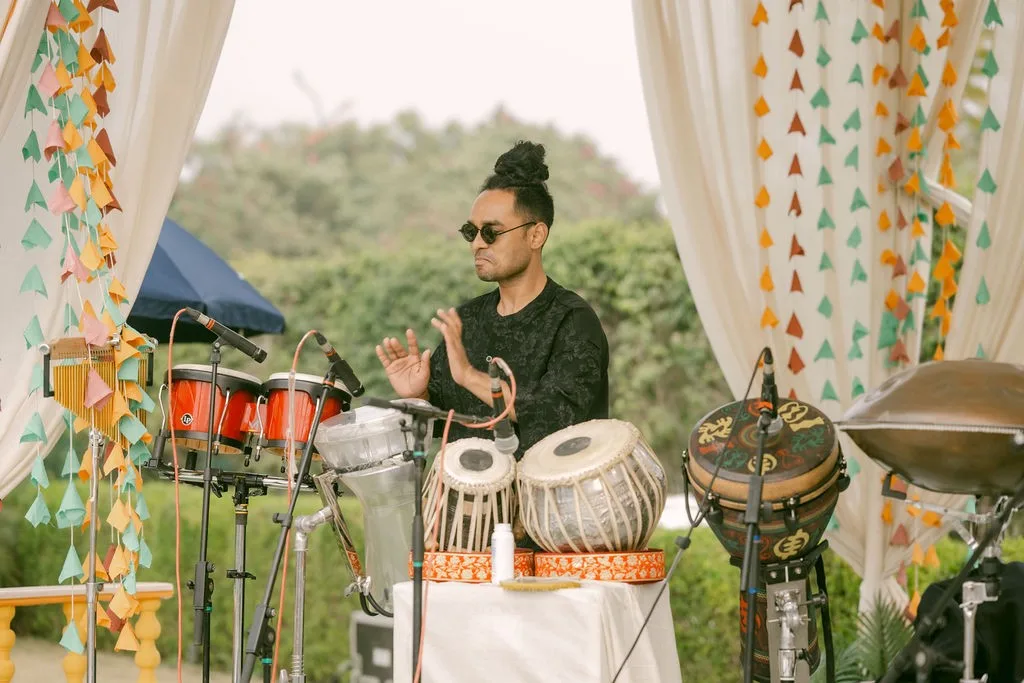
Creating a sense of place is not only visual.
Close your eyes at a destination wedding and listen.
The music can tell you where you are just as effectively as the décor. A local instrument during a welcome, a regional artist during an intimate evening or a contemporary interpretation of traditional music can introduce the character of a destination without making it feel obvious.
Music also gives the wedding its own rhythm.
A relaxed welcome can sound completely different from an energetic sangeet. A sunset gathering can have a different musical language from a late-night reception. These transitions help create a natural progression throughout the wedding weekend.
When music, design, food and setting are considered together, the destination becomes something guests experience through all their senses.
The Story Should Begin Before the First Event
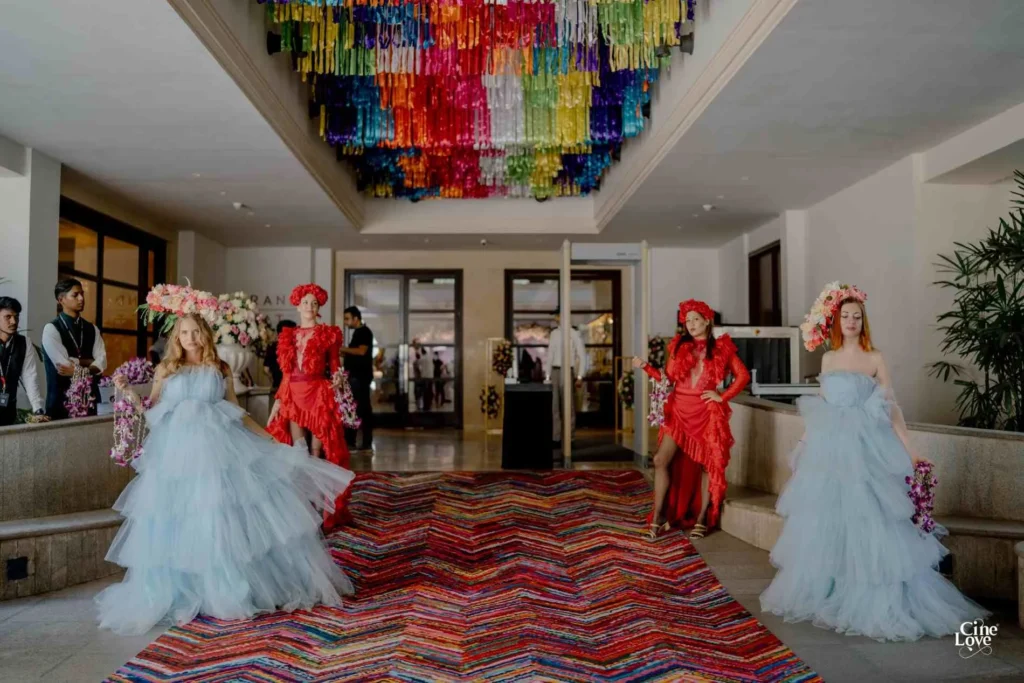
One of the biggest mistakes in destination wedding planning is thinking that the experience begins when guests enter the first event space.
It begins much earlier.
It starts with the arrival. The journey to the hotel. The first welcome. What guests find in their rooms. What they eat. What they see outside the event spaces. How they spend the moments between celebrations.
A destination wedding gives guests the rare opportunity to step away from their everyday surroundings and enter a completely different world for a few days.
That experience should be designed with the same thoughtfulness as the wedding itself.
A welcome gift can introduce a local craft. A curated meal can introduce regional flavours. An itinerary can encourage guests to experience something unique to the destination. Even the smallest details can make the location feel present throughout the weekend.
This is one of the defining differences between simply planning events and planning a complete luxury destination wedding experience.
Beautiful Is Not Enough. It Has to Belong.
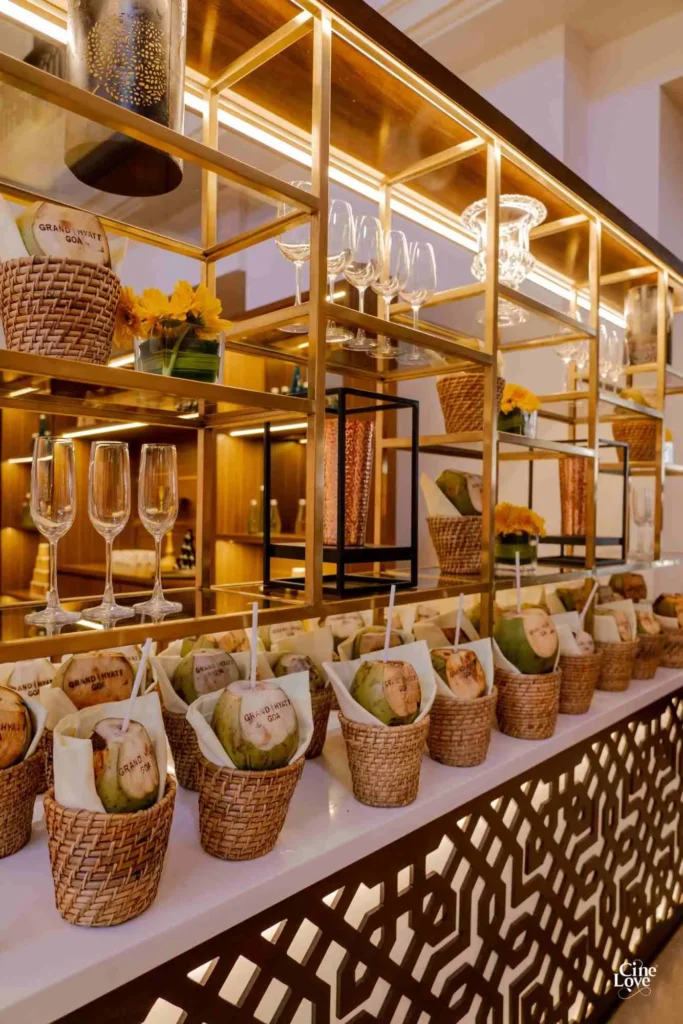
There is an easy temptation to create a wedding that looks beautiful anywhere.
A beautiful stage. Beautiful flowers. Beautiful tables. Beautiful lighting.
But take the location away from the photograph for a moment.
Would you still know where the wedding took place?
That question can reveal a great deal about the design.
A destination wedding should have details that make sense because of where it is happening. Not because they are currently popular. Not because they appeared on a mood board. But because they naturally belong to the setting and to the couple.
This is also where personalization becomes essential.
Two couples can choose the same hotel, the same destination and even the same season, yet their weddings can feel completely different. One may be drawn towards contemporary design, another towards heritage. One may build the weekend around food and hospitality, another around music and intimate gatherings.
The destination provides the context.
The couple provides the meaning.
Know What to Add and What to Leave Alone
Luxury wedding design is often associated with abundance, but sophistication can also come from restraint.
If the architecture is remarkable, allow it to remain visible. If the landscape is extraordinary, build around it. If the destination has a strong cultural identity, interpret it thoughtfully rather than reproducing it literally.
Sometimes the most confident design decision is knowing what not to add.
A setting does not become more luxurious because every surface has been decorated. It becomes more memorable when every detail feels intentional.
That is particularly important when working with destinations that already have a strong sense of identity.
The design should enhance the place without overwhelming it.
Let the Season Become Part of the Design
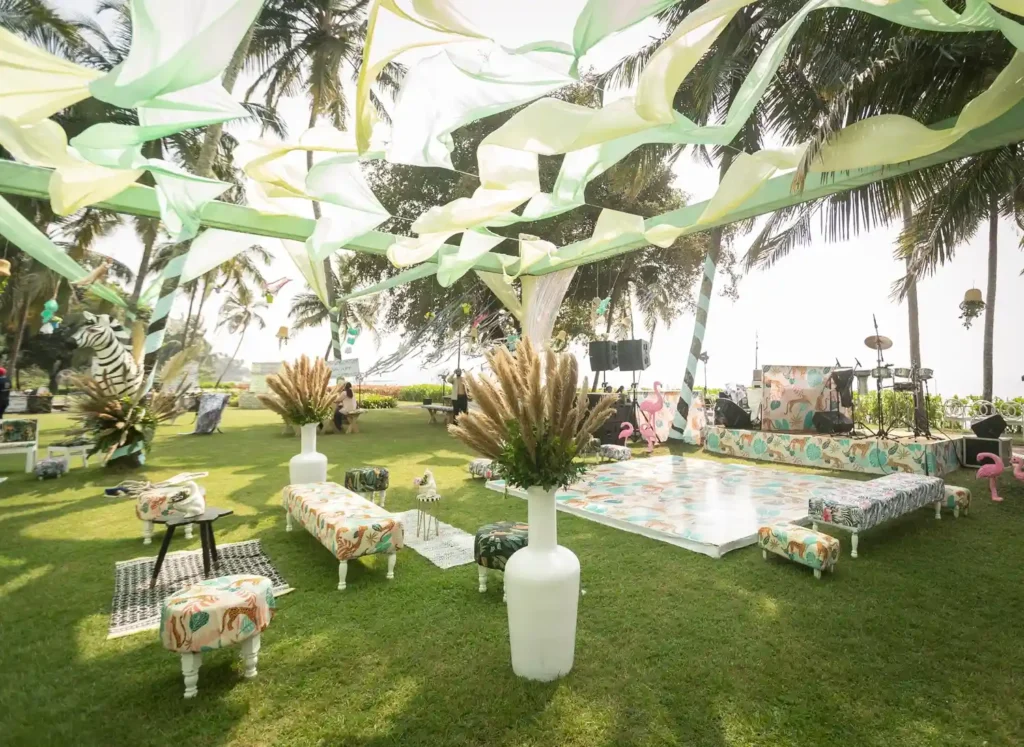
A destination is never exactly the same throughout the year.
The light changes. The landscape changes. The temperature changes. The atmosphere changes.
So the wedding should change with it.
Seasonality can influence the colour palette, flowers, fabrics, menus, event timings, lighting and guest experience. A winter celebration in Rajasthan can embrace warmth and richer textures, while a coastal wedding may benefit from an open-air approach that allows the landscape to take centre stage.
The season can even influence how guests move through the wedding weekend.
A thoughtfully planned bespoke destination wedding considers these details from the beginning rather than treating the season as a logistical afterthought.
The destination already has its own rhythm.
The wedding should work with it.
Design for the Memory, Not Just the Photograph
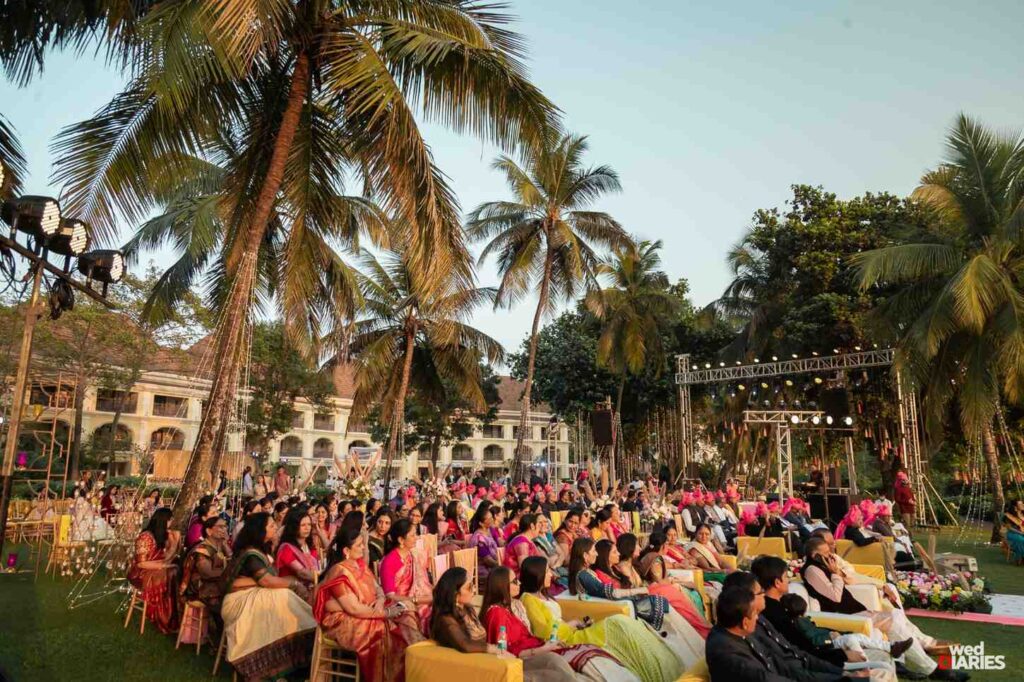
There is a difference between seeing a wedding and experiencing one.
A photograph captures the flowers, the tablescape and the setting. A memory captures much more the feeling of the evening, the sound of music across a courtyard, the taste of dinner, the view from the table, the warmth of the people around you and the moment the sky changed colour.
That is why guest experience should remain at the heart of luxury destination wedding planning.
Can guests see the ceremony comfortably? Can they move naturally from one space to another? Is there enough time to enjoy the destination? Does the music suit the environment? Does the lighting create atmosphere while still allowing guests to interact with one another?
These details may not always appear on a mood board.
But they are often the details people remember.
Because the ultimate goal of a destination wedding is not simply to create something beautiful to photograph.
It is to create something beautiful to remember.
When the Destination Becomes Part of the Story
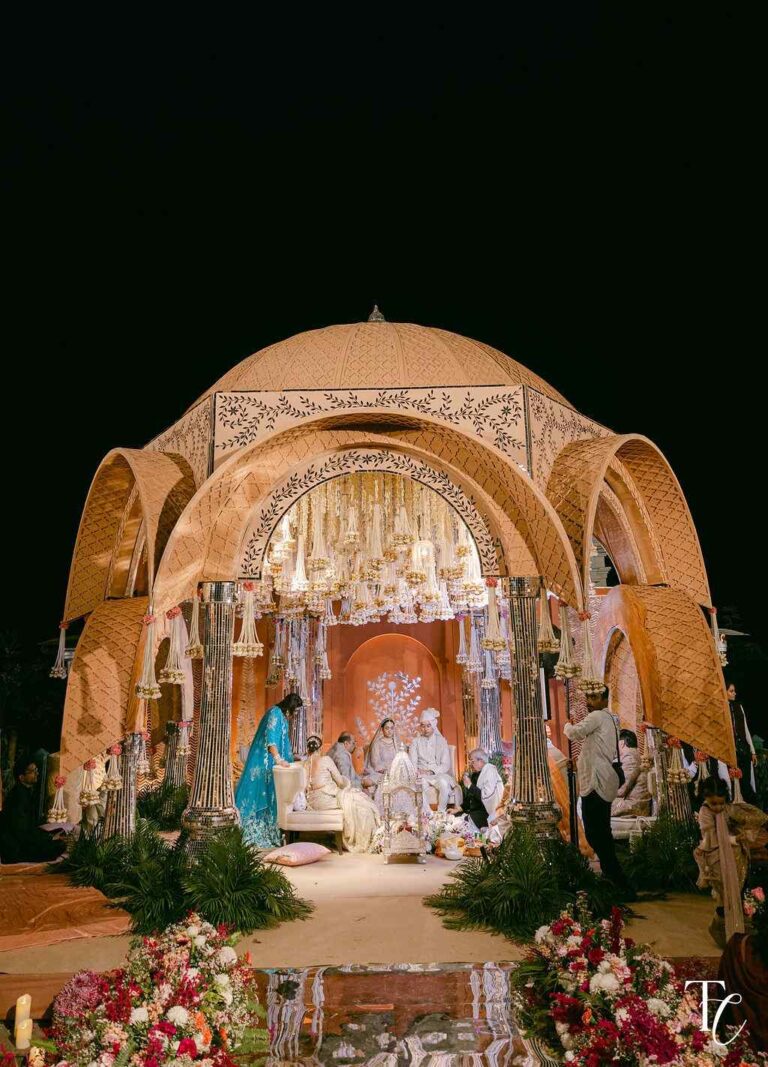
Perhaps the most meaningful outcome of thoughtful destination wedding design is that, over time, the location becomes part of the couple’s own story.
Years later, they may not remember every flower that stood beside the aisle. But they may remember watching the sunset over the lake with their closest people. They may remember dinner under the stars. They may remember the sound of music travelling through an old courtyard. They may remember waking up in a new city surrounded by everyone they love.
The destination becomes attached to the memory of the wedding.
And that is when it has done more than provide a venue.
It has become part of the story.
The Destination Sets the Stage. The Couple Gives It Meaning.
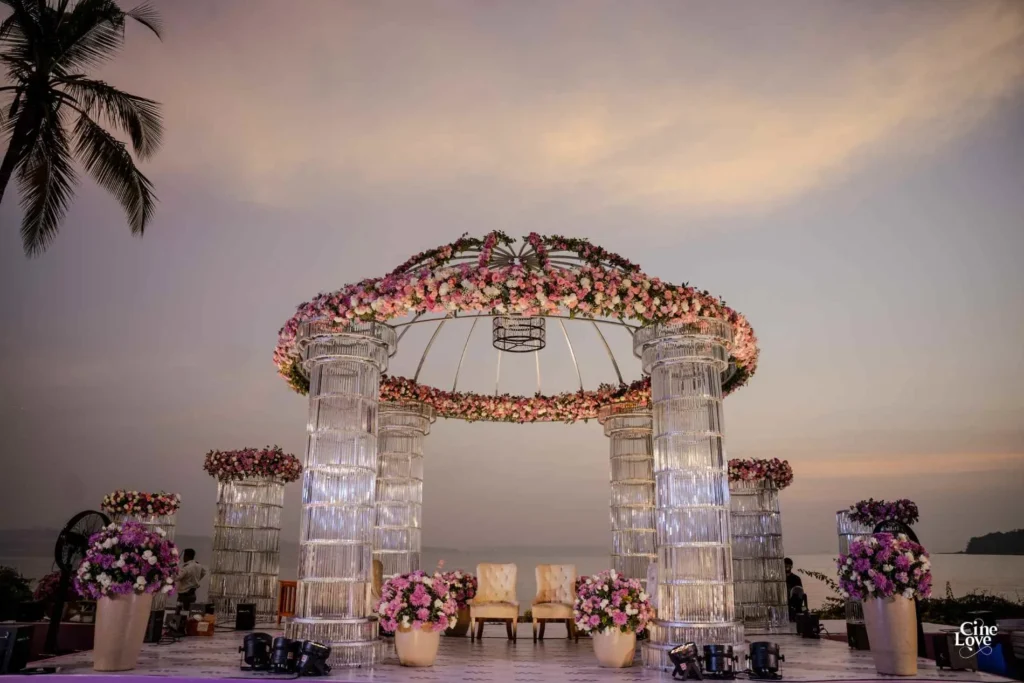
The future of luxury destination weddings is moving towards experiences that feel increasingly intentional, personal and connected to their surroundings. Design is no longer limited to what guests see. It extends into hospitality, cuisine, music, architecture, landscape, movement and the small details that shape how a wedding is experienced.
For couples planning a destination wedding, that creates a more interesting starting point.
Instead of asking, “What should our wedding look like?”
Ask:
“What should this place make our wedding feel like?”
The answer can influence every decision that follows.
Because the most memorable destination weddings are rarely the ones where every detail tells you where you are.
They are the ones where you simply feel it.
You know you are in Udaipur because the lake, architecture and evening light have quietly become part of the experience. You know you are in Jaipur because its heritage and craftsmanship have been interpreted with a contemporary point of view. You know you are in Goa because the celebration moves naturally with its coastal surroundings. You know you are in Thailand because the landscape, hospitality and atmosphere are woven into the journey.
And somewhere within all of it, you still recognise the couple.
That is the real art of destination wedding design.
The destination sets the stage.
The design gives it a voice.
The couple gives it meaning.
And thoughtful planning turns it into a memory that lasts.