


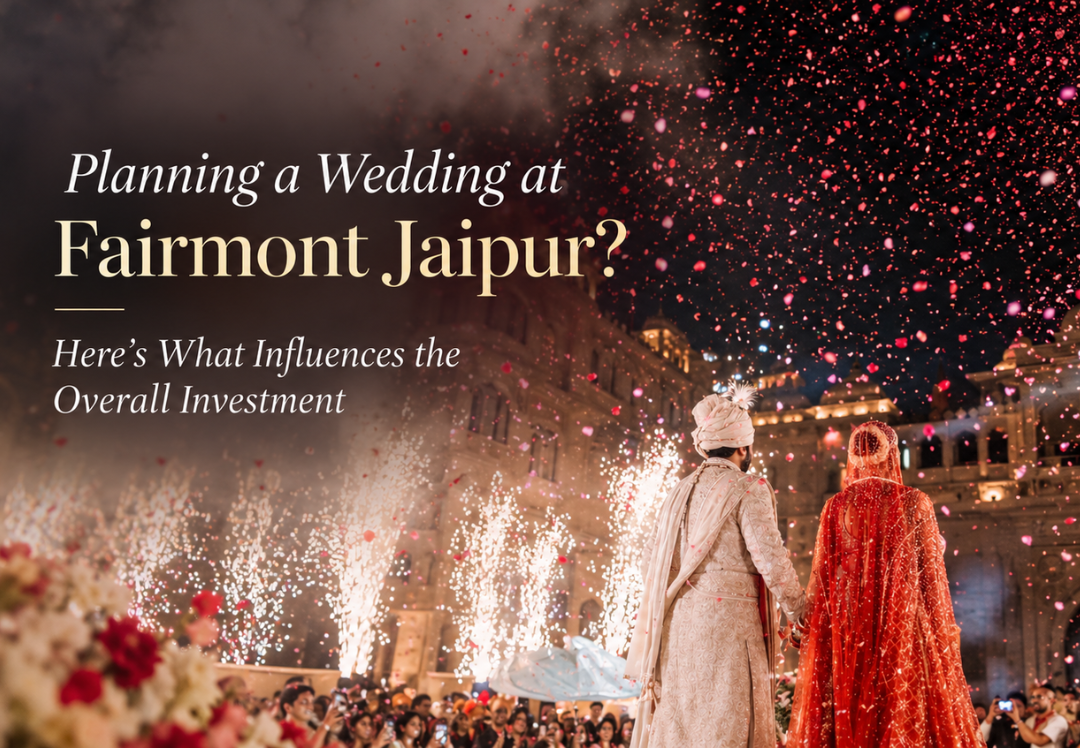
29 Oct Planning a Wedding at Fairmont Jaipur? Here’s What Influences the Overall Investment
Jaipur has long been a preferred destination for couples who want their wedding to reflect the beauty and heritage of Rajasthan. Among its luxury venues, Fairmont Jaipur stands out for its palace-inspired architecture, grand interiors and setting against the Aravalli Hills.
The property offers a range of event spaces, giving couples the flexibility to plan different functions under one roof. From an intimate welcome evening to a large sangeet or wedding celebration, each space offers different possibilities for the overall design and experience.
However, planning a wedding at Fairmont Jaipur involves more than selecting a venue. The guest list, accommodation, number of functions, décor, catering and entertainment all influence how the celebration comes together.
So, what should couples understand when exploring the Fairmont Jaipur wedding cost? From a planning perspective, the answer lies in how these elements work together. Each decision affects the next, making it important to look at the wedding as one complete experience rather than a collection of separate events.
1. Understanding the Venue and Its Event Spaces
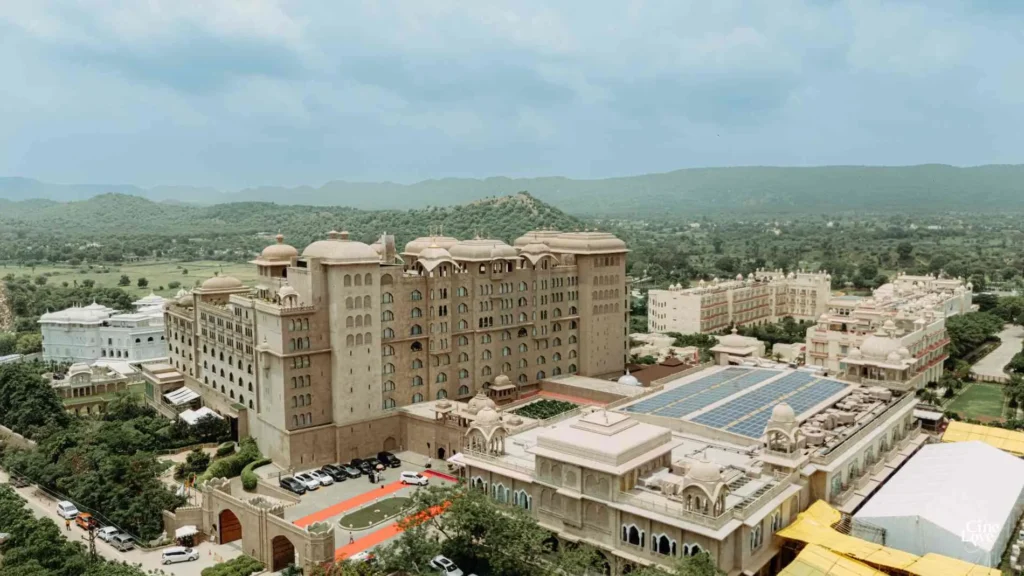
The choice of event space influences much more than the setting of a function. It also affects the layout, guest movement, design possibilities and technical requirements.
Fairmont Jaipur offers nine event venues, including the Grand Ballroom and Viti Ballroom, alongside smaller spaces for more intimate gatherings. The right choice depends on the nature of the function, the number of guests and the atmosphere the couple wants to create. Current capacities and availability should always be confirmed with the venue.
For example, a sangeet requires space for performances, staging, lighting and sound, while a wedding ceremony needs a layout that allows the mandap, seating and guest movement to work together comfortably. A welcome dinner may call for a different arrangement altogether.
This is where venue selection becomes an important planning decision. Choosing a space that suits the function from the beginning helps the design and production teams work more efficiently. It also reduces the need to compromise on the overall experience later.
2. Guest Count and Accommodation Requirements
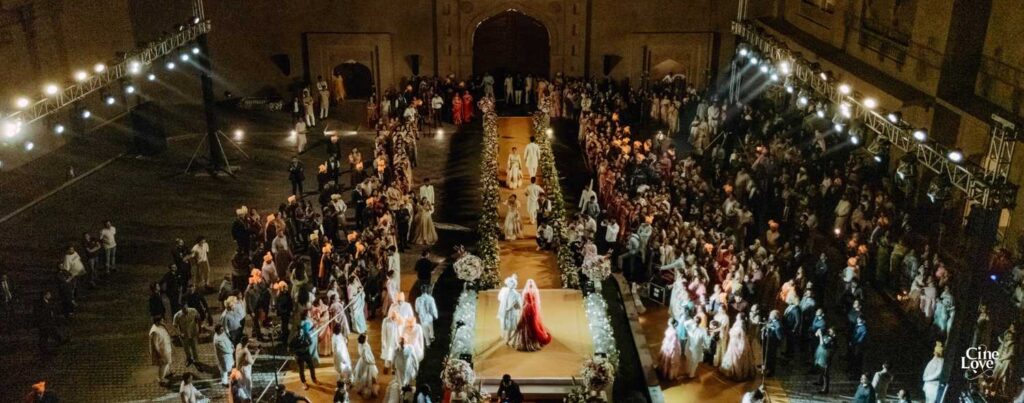
The guest list is one of the first details that shapes the planning process. It influences accommodation, catering, transportation, seating and the scale of each function.
For a destination wedding, the number of guests attending and the number requiring accommodation may be different. Some guests may arrive only for the wedding day, while others may stay throughout the celebration.
Understanding this distinction helps the planning team assess room requirements, arrival schedules and hospitality arrangements more accurately. It also helps determine how different functions should be planned, as the guest count may vary from one event to another.
From an investment perspective, accommodation and guest numbers need to be considered together. A larger room requirement affects the overall venue proposal, while a larger event may require additional catering, staffing and production.
The aim is not simply to accommodate everyone, but to create a comfortable experience that reflects the scale and style of the celebration.
3. Number of Functions and Duration of the Celebration

A destination wedding often unfolds over several days, with each function contributing something different to the overall experience.
A typical celebration may include a welcome dinner, mehendi, haldi, sangeet, wedding ceremony and reception. Some couples may also choose to host a farewell brunch or other gatherings for their guests.
Each additional function brings its own requirements. A daytime mehendi may focus on floral styling, relaxed seating and entertainment, while a sangeet may require a larger stage, technical production and rehearsals. A wedding ceremony may involve a separate design concept and carefully planned guest arrangements.
The number of functions also affects the schedule. Décor changes, venue transitions, vendor access and installation timings need to be coordinated across the celebration.
An experienced planning team considers these requirements together before finalising the event schedule. This helps ensure that each function has its own identity while remaining connected to the overall wedding vision.
4. Décor, Design and Technical Production

Décor is often one of the most distinctive parts of a luxury wedding, but the investment depends on more than the visual concept alone. The scale of the installations, choice of materials, floral requirements and complexity of execution all influence the final design.
At Fairmont Jaipur, the architecture can provide a strong starting point for the creative direction. A design that works with the property’s character can feel considered and cohesive, whether the couple prefers understated styling or a more elaborate setting.
The next step is translating that vision into a practical design plan. Floral installations, mandap structures, stage design, furniture, lighting and custom fabrication each require different resources and timelines.
Technical production is equally important. Sound, lighting and audiovisual requirements need to be planned according to the venue and the activities taking place. Larger performances or more complex installations may also require additional coordination.
The key is to establish the creative direction early and understand what it takes to execute it. This allows the design team to make informed choices while maintaining consistency across the different functions.
5. Food, Beverage and Entertainment

Food and entertainment shape how guests experience each part of the wedding. Both should be considered in relation to the event schedule, guest preferences and atmosphere the couple wants to create.
Fairmont Jaipur offers customised menu options featuring Indian and international cuisines. The final catering arrangements should be discussed directly with the venue, as the available options and commercial terms may vary.
The number of guests, meals and functions all influence the catering requirements. A welcome lunch, a formal reception dinner and a late-night gathering may each need a different menu and service format.
Entertainment also needs to be planned around the purpose of each event. Live musicians may suit a relaxed welcome evening, while a sangeet may involve performances, rehearsals, staging and more extensive sound and lighting requirements.
Looking at food, beverage and entertainment as part of the same plan helps create a better flow throughout the celebration. It also allows the team to understand the operational requirements of each function before arrangements are confirmed.
6. Seasonality, Wedding Dates and Availability
The wedding date can influence venue availability, accommodation arrangements and the planning timeline.
Jaipur’s cooler months are popular for outdoor celebrations, making early coordination particularly important for couples with specific dates in mind. Availability should be checked for both the preferred event spaces and the accommodation required by guests.
The season also affects practical decisions. Outdoor functions may require additional arrangements for guest comfort, lighting and weather contingencies. These considerations can influence both the design and the event schedule.
Date flexibility can be useful when exploring options with the venue. Rather than assuming that one season or date will automatically offer better value, couples should compare current proposals and understand the terms associated with their preferred options.
From a planning perspective, confirming dates early creates a clearer foundation for coordinating the remaining elements, including vendors, design, accommodation and guest travel.
7. Guest Hospitality and Destination Logistics

A destination wedding is an experience that begins before the first function and continues until guests depart. The arrangements surrounding the events are therefore just as important as the celebrations themselves.
For a wedding in Jaipur, the planning team may need to coordinate airport transfers, arrival schedules, room allocations, welcome amenities and event itineraries. These arrangements become more involved when guests arrive at different times or stay for different durations.
Guest movement also needs attention. Clear timings, transport coordination and communication help guests move comfortably between planned activities and reduce confusion during a multi-day celebration.
The level of hospitality depends on the couple’s preferences and the needs of their guests. Some celebrations may require a straightforward welcome and itinerary, while others may include personalised amenities and additional assistance.
Planning these details alongside the event schedule helps create a consistent experience. It also ensures that hospitality is integrated into the wedding plan rather than treated as a last-minute arrangement.
8. Venue Inclusions, Policies and Additional Requirements

Understanding the venue proposal is an important part of assessing the overall investment. Two wedding plans may appear similar at first but involve different requirements depending on what is included and what needs to be arranged separately.
Couples should review the terms for accommodation, catering, event spaces and any other services included in the proposal. They should also clarify current policies regarding external vendors, décor installations, sound, event timings and setup schedules.
These details can influence the design and execution of the wedding. For example, a custom installation may require additional setup time, specific permissions or coordination with the venue’s technical team.
A detailed review helps identify these requirements before vendors are finalised and commitments are made. It also gives the planning team a clearer understanding of the work involved and helps avoid unexpected changes during the later stages.
The most useful approach is to confirm all inclusions, exclusions, applicable charges and policies directly with Fairmont Jaipur before making decisions based on them.
9. Contingency Planning and the Importance of Early Coordination
10. Questions to Ask Before Planning a Wedding at Fairmont Jaipur
Before moving forward with the venue, there are several details worth clarifying. From a planning perspective, these conversations help establish the requirements of the wedding before the design and vendor arrangements are finalised.
Venue and availability
- Which event spaces are available on the preferred dates?
- What are the capacities and permitted setup options for each space?
- Are there any restrictions on event timings, sound or installations?
Accommodation and catering
- What accommodation arrangements are available for the expected guest count?
- Which catering options and menu customisations are available?
- How will room requirements and meal arrangements be reflected in the proposal?
Design and production
- What are the current policies for external décor and production vendors?
- What setup, rehearsal and dismantling timings are permitted?
- Are there any technical or structural restrictions that may affect the design?
Commercial terms
- Which services are included in the proposal?
- Which requirements need separate arrangements?
- What are the payment terms, cancellation conditions and applicable taxes?
- What contingency options are available for outdoor functions?
Having clarity on these points allows the venue, planning team and vendors to work from the same understanding. It also helps couples make decisions with a clearer picture of the requirements involved.
11. How a Luxury Wedding Planner Helps Bring Everything Together
The factors that influence a wedding’s investment are closely connected. The guest count affects accommodation and catering, the event schedule affects production, and the design vision influences the resources and coordination required.
A luxury wedding planner brings these elements together from the beginning. Rather than looking at each decision in isolation, the planning process considers how the different parts of the celebration will work as a whole.
This includes developing the event schedule, coordinating with the venue, aligning vendors, translating the design vision into an executable plan and managing guest hospitality. It also involves identifying requirements early, reviewing proposals and preparing for the practical details that support the celebration.
At The Global Design Co., the focus is on combining creative direction with detailed planning and on-ground coordination. Every wedding has its own priorities, and the role of the planning team is to understand those priorities and build a celebration around them.
When the venue, design, hospitality and logistics are planned together, couples have a clearer view of the overall requirements and can make decisions with greater confidence.
12. Conclusion: Planning Your Wedding at Fairmont Jaipur

Fairmont Jaipur offers a distinctive setting for couples looking to celebrate their wedding in Jaipur. The overall investment, however, depends on how the celebration is planned, from the number of guests and accommodation to the functions, design, catering and guest experience.
What matters is understanding how these decisions connect. A clear guest estimate informs accommodation and event planning. A defined design direction helps establish production requirements. An organised schedule brings the venue, vendors and hospitality arrangements together.
This is why planning a wedding at a luxury property begins well before the events themselves. With the right preparation, couples can make informed decisions and create a celebration that reflects their vision while accounting for the practical details behind it.